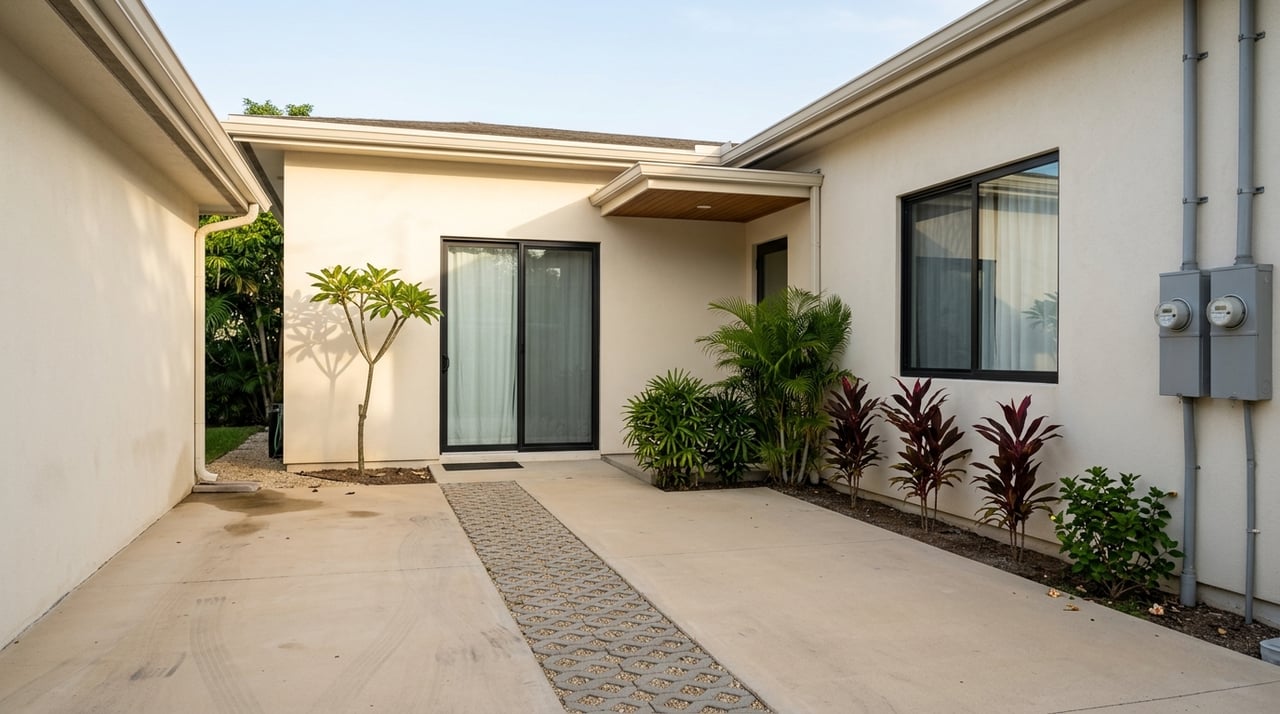
Kaimuki ADU And Ohana Unit Rules That Shape Lot Value
May 7, 2026
May 7, 2026
Wondering if an ADU or ʻohana unit could unlock more value from your Kaimuki property? You are not alone. Many homeowners and investors see the appeal of adding flexible living space, creating room for extended family, or generating long-term rental income, but Honolulu’s rules make the details matter. If you are weighing the idea, this guide will help you understand what to check first, what usually affects feasibility, and where the value can come from. Let’s dive in.
In Kaimuki, the first question is not design. It is legality. Because Kaimuki properties fall under Honolulu’s Land Use Ordinance, you need to confirm your lot’s exact zoning and any special parcel designations before making plans.
Honolulu allows one accessory dwelling unit on a zoning lot in the Country, R-3.5, R-5, R-7.5, R-10, and R-20 districts. That ADU can be newly built or created by converting a legally established structure, attic, or basement. The unit also has to follow the development standards of the underlying zoning district.
ADUs and ʻohana units are not the same thing. Honolulu describes an ʻohana unit as a limited-size accessory home on a lot where the zoning would normally allow only one house, and it must be occupied by relatives of the family living in the main house. That difference is important because your goal, whether it is long-term rental income or multigenerational living, can shape which path makes sense.
If your main goal is rental income, an ADU may be the more relevant option. Honolulu ties ADUs to a recorded covenant that limits them to long-term rental use rather than transient use. In simple terms, you should underwrite an ADU as a long-term housing option, not a vacation rental.
If your main goal is housing for family members, an ʻohana unit may fit that use better when the property and designation allow it. Honolulu also continues to regulate nonconforming ʻohana dwellings, including limits on rebuilding or expansion. That means existing older second units need careful review before you assume they can be enlarged or reconstructed.
For many Kaimuki owners, the right first step is to define the outcome you want. Do you want rental income, a place for relatives, or flexibility for future resale? Once that is clear, zoning review becomes much more useful.
A property can look large enough on paper and still fail the real test once setbacks and building limits are applied. In Honolulu’s residential districts, the underlying zoning standards do a lot of the heavy lifting in an ADU feasibility review.
For example, in the R-5 district, the minimum lot area for a one-family detached dwelling is 5,000 square feet. The required yards are 10 feet in front and 5 feet on the side and rear, and the maximum building area is 50 percent of the zoning lot. In R-7.5, the minimum lot area is 7,500 square feet, with the same yard setbacks and the same 50 percent building-area cap.
Because ADUs must comply with the standards of the underlying zoning district, these measurements often decide whether a concept works. A detached unit, an addition, or a conversion may each fit differently once you factor in lot coverage and required yards.
In Kaimuki, parking is often the issue that turns a promising idea into a hard no. Honolulu requires one additional off-street parking space for an ADU beyond the parking already required for the main dwelling, unless the ADU is within one-half mile of a rail transit station.
That means the practical questions are not just about square footage. You also need to know whether the lot can physically accommodate another stall while still respecting setbacks, driveway access, and turning space. On many older properties, that site math matters as much as the home itself.
ʻOhana dwellings also have to satisfy the district’s parking and building-area rules. If you are looking at an older second unit on a Kaimuki lot, do not assume the existing setup will automatically satisfy current standards.
A lot of owners focus on plans and construction pricing first. In Honolulu, utility confirmation should happen early because it is part of the feasibility test, not just a later permit detail.
Before a building permit is issued for an ADU, the applicant must get written confirmation from the responsible agencies that wastewater treatment and disposal, water supply, and access roadways are adequate. The Land Use Ordinance is clear that ADUs are intended only in areas where wastewater, water supply, and transportation facilities can support the additional unit.
This can affect both timing and cost. If your project needs utility upgrades, access improvements, or added review, your schedule may stretch well beyond the original plan.
Construction cost is only one piece of the budget. In Honolulu, local cost inflation and utility-related charges can meaningfully change the numbers.
DBEDT reported that Honolulu’s construction cost index for single-family residences increased 5.0 percent year over year in the fourth quarter of 2025 and 4.4 percent for all of 2025. A practical early estimate for a modest conversion or compact detached ADU is often in the low-to-mid six figures, with more site-intensive projects moving materially higher.
Water service is another variable. The Board of Water Supply says service must have sufficient pressure and supply for domestic use and fire protection, and it must be able to take on new or additional service without harming existing customers. If a project needs a new or larger meter, the monthly charge varies by meter size, with a 5/8-inch or 3/4-inch meter listed at $15.95 per month effective July 1, 2025.
Wastewater charges matter too. The City’s official statement lists a residential wastewater system facility charge of $6,616 per ESDU. It is not the whole story on project cost, but it is a real line item that should be in your budget.
Kaimuki has many older homes, and that can create added complexity for ADU conversions. If a structure was built without a permit before September 14, 2015, conversion work may require an after-the-fact building permit.
That can mean more document gathering, more engineering review, and more time. If your property has a carport enclosure, past addition, or altered accessory space, it is smart to verify what was legally established before you build a plan around it.
This is one reason early due diligence matters. It helps you avoid spending time and money on a concept that may need to be reworked later.
When owners talk about value, they often mean rent. That is part of the picture, but in Kaimuki, you should look at both income potential and resale appeal.
For income, your model should assume long-term rental use only for an ADU. Current Honolulu rent benchmarks can give you a starting point. Zillow shows an average rent of $2,895 in Honolulu, while Rentometer shows Honolulu County averages around $1,928 for a one-bedroom and $2,669 for a two-bedroom.
Those numbers are only a starting point. Your actual underwriting should compare the finished unit against neighborhood-level comps and account for vacancy, maintenance, utilities, and financing costs.
On the resale side, legal second-unit potential can make a property more appealing in a high-price market. DBEDT reported a Honolulu median single-family resale price of $1.12 million in the fourth quarter of 2025, and the Honolulu Board of REALTORS® reported a February 2026 median single-family resale price of $1,205,000.
In that kind of market, a legal and well-planned second unit may broaden the buyer pool. Buyers tend to place more value on flexibility when the parking, utility planning, and recorded requirements are already clean and clear.
If you are seriously exploring an ADU or ʻohana unit, this is the order that usually makes the process clearer:
A Kaimuki lot may look straightforward at first glance, but ADU and ʻohana unit value depends on details. Zoning, parking, permit history, utility confirmation, and intended use all shape whether a project is practical and whether it adds meaningful value.
That is where local, data-driven guidance can make a real difference. If you are thinking about buying a property for ADU potential, selling a lot with second-unit upside, or evaluating whether your current home can support an added unit, having a clear feasibility and pricing strategy matters.
If you want help evaluating a Kaimuki property through both a homeowner and resale lens, connect with Marisa Norfleet for thoughtful, local guidance tailored to your goals.
Stay up to date on the latest real estate trends.
For personalized assistance with your real estate needs, reach out to Marisa directly. With her deep knowledge of the market and commitment to client satisfaction, she is poised to provide you with the utmost support in navigating your real estate journey.