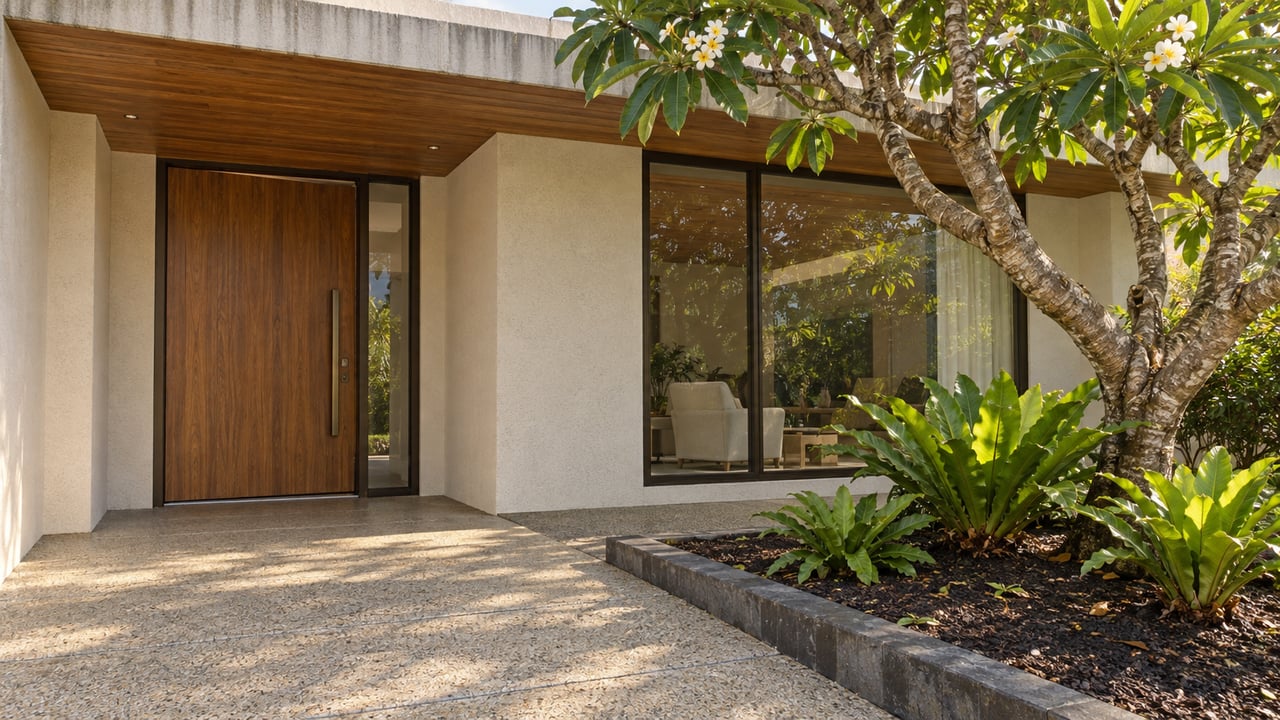
Diamond Head Special District Renovation Permits: Know the Timeline
October 8, 2026
"The median wait time to obtain a new building permit dropped to 2.5 months in the period from August through April," Honolulu Civil Beat reported on June 17, 2026. That's a 40% drop from the four months it took over the same eight-month stretch a year earlier. For anyone buying a home on Diamond Head Road or near the edge of Kapiolani Park with plans for a new lanai, a second story or a full rebuild, that number answers a different question from the one they're actually asking.
The 2.5-month median measures the building permit. In the Diamond Head Special District, the city's Department of Planning and Permitting lists Special District Permits as zoning approvals that may be required before building or site-development permits. That approval has its own published timeline, its own fees and, for larger projects, a public step that has to happen before the application can even be filed. A renovation timeline in Diamond Head starts with that clock, and the better headline figure only describes the part that comes after it.
Civil Beat's analysis gave a caveat with its good news. In many cases, the city no longer tracks the time spent in prescreen, the check of plans for basic requirements. That step used to take DPP staff months. Some applicants now handle it themselves before officially submitting, using an AI tool. DPP describes that tool, CivCheck, as optional for residential applicants.
So the improvement is real, and it's also measured from a later starting line than before. The same reporting included an architect's Woodlawn Terrace addition, which sat with DPP for 47 days before it went back to the client. A DPP spokesman called that delay abnormal and said the review now typically takes 12 days. Faster as a system can still mean slow for one particular project, and in Diamond Head the special district review comes on top of all of it.
Here's how DPP's own application instructions lay out the sequence for a special district project. Zoning permit applications have gone through HNL Build since August 4, 2025.
Add up the published windows and it looks like this on paper. A minor permit can take about two weeks for the completeness check plus 45 days for a decision, roughly two months, before the building-permit median starts. A major permit can take up to 60 days waiting for a board slot, two weeks for completeness and 90 days for a decision, which comes to about five months. Those are the city's stated decision windows, not measured averages, and the research turned up no Diamond Head-specific processing data. Even so, they're the most concrete planning figures available, and none of them appear in the citywide headline.
Which path a project takes decides most of that timeline. Under Honolulu's Land Use Ordinance, special district work falls into one of three classes. Major permits cover work that could substantially change a district's intended character, and a design advisory committee reviews them. Minor permits cover work with limited impact, and the director can review and modify those projects. Exempt work gets no review at all; examples include emergency repairs and interior work that leaves a building's exterior unchanged.
| Minor permit | Major permit | |
|---|---|---|
| Completeness check | 10 business days | 10 business days |
| Decision window | 45 calendar days, extendable | 90 calendar days, extendable |
| Before filing | No board presentation required | Neighborhood board presentation, written notice to adjoining owners |
| During review | No hearing notice required | Notice to owners within 300 feet, sign posted 14 days before hearing |
| Base fees | $200 initial review + $400 processing | $400 initial review + $800 processing + $300 per acre, capped at $15,000 |
| Tree removal | $100 per tree, capped at $600 | Part of the project review |
The fees in that table are small next to the cost of the work, and they're separate from building-permit fees, which DPP bases on construction value and which can include a plan-review fee. The bigger cost is time, plus one rule that catches owners who start early: the special district fees double once an applicant has been cited for going ahead without the required approval. The current application instructions are dated November 25, 2025, so confirm the live fee schedule with DPP before filing.
The exact project-by-project classification lives in the ordinance's Diamond Head use table, Table 21-9.2. This piece doesn't sort specific additions or rebuilds into minor or major, and no one should rely on a general guide for that call. It depends on the parcel and the scope of work, and it's the first question to put to DPP and your architect.
The district's design guideline is dated November 2018, and DPP still links to it from its special district permit page. Its rules work at a much finer grain than most buyers expect:
Each of these can add time on its own. A pool-equipment pad, a new driveway or a different exterior cladding can turn what looked like a building-permit-only job into a special district application.
An offer on a Diamond Head home bought for its renovation potential is really a bet on timing. Before writing it, these questions are worth answering with DPP and a licensed architect:
The answers decide whether a renovation timeline should be planned around roughly two months of zoning review before the building permit, or roughly five. They also show whether a seller's earlier work went through the special district review that applied to it.
Under the ordinance's general rules, interior work that doesn't change a structure's exterior appearance is exempt from special district review. A building permit may still be required for the work itself.
DPP's Land Use Ordinance, revised April 2026, lists two 2026 amendments, Ordinances 26-7 and 26-8. They cover apartment and mixed-use development and sign standards, not the Diamond Head district.
The board presentation is a filing prerequisite for major permits, and it counts as satisfied if the board doesn't offer a slot within 60 days. DPP makes the permit decision. The public step mostly adds time and attention to the process.
If you're weighing a Diamond Head home for what it could become, Marisa Norfleet can help you work through the Core Area, height-band and permit-path questions with your architect before your offer deadline, so your contingencies and budget reflect the full sequence. Let's Connect.
This article is general information, not legal, tax or financial advice. Consult a qualified professional about your situation.
Stay up to date on the latest real estate trends.

For personalized assistance with your real estate needs, reach out to Marisa directly. With her deep knowledge of the market and commitment to client satisfaction, she is poised to provide you with the utmost support in navigating your real estate journey.