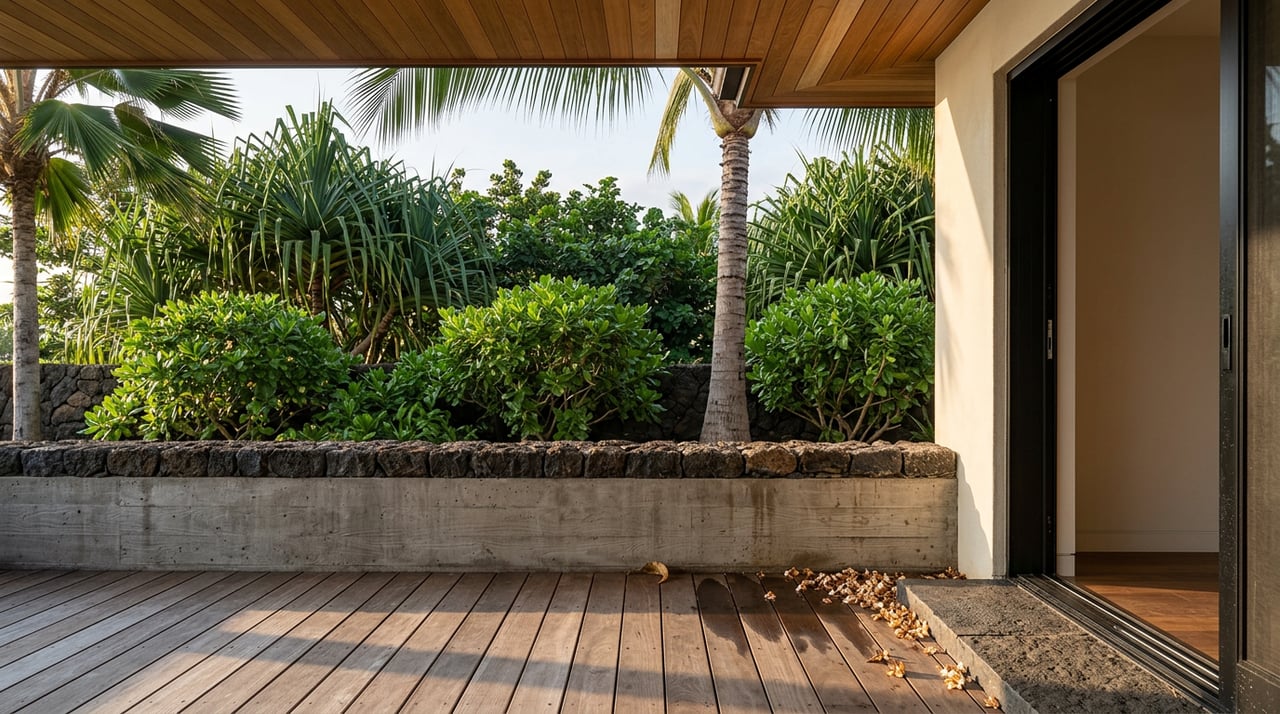
A Portlock Summer Saturday: The Point, The Huki, And The Sunset At The Wall
July 23, 2026
July 23, 2026
By 6:15 on a July morning, Portlock Road is quiet in the specific way only a peninsula can be quiet. The trades have not filled in yet. A single paddler is already off the point. The wall at the end of Hanapepe Loop is empty, which will not be true again until Tuesday.
If you live here, you already know the neighborhood runs on a different clock between April and September. This post is about what that clock actually looks like, hour by hour, and why the same swell that makes the wall a spectacle at sunset makes the morning water calmer than any beach on the windward side.
Portlock's summer schedule is dictated by the south swell. The best time of year for surfing China Walls with consistent clean waves is during summer and most often the month of July, with clean surfable waves typically found 71% of the time in July. That is the number to hold in your head. It means seven mornings out of ten in July, the point is working. It also means the crowd is predictable, which is what lets a resident plan around it.
The stretch of coast between the launch ramp and Portlock Point is a working ocean before 8 a.m. The Maunalua Bay Launch Ramp Facility houses Hui Nalu Canoe Club, a recreational and competitive canoe club founded in 1908 by Duke Kahanamoku and the Waikiki Beach Boys. Paddlers are out. Fishermen work the reef edges. The point itself sits quiet.
That quiet is not an accident. Mornings are calmest, least crowded, and best for swimming or jumping — the wind hasn't roughed up the surface yet, and you'll have the rocks closer to yourself. If you want to swim at the wall, this is the window. The China Walls cliff jump can be anywhere from 5 to 15 feet high depending on surf and tide, with most people jumping from the makai side where the drop is about 5 feet, while the mauka side runs 10 to 15 feet. Locals time the exit to a rising swell. Visitors do not, which is a good reason to be in the water before the first rental car finds Hanapepe Loop.
A pragmatic note on parking, since this is a resident post and not a travel blog: there is ample street parking on Hanapepe Loop, and there is no parking on the street directly in front of Koko Kai Mini Beach Park, so you walk over once you find a spot. The cul-de-sac patience runs thin by 9 a.m. Get in and out before then, and you have essentially had the point to yourself.
Somewhere between the morning swim and the afternoon lull, the most Portlock thing you can do on a Saturday is walk over to Paikō and pull limu.
Maunalua Bay covers 6.5 square miles of ocean and nearshore reef, stretching from Kawaihoa (Koko Head Point) to Kūpikipikiʻō (Black Point). Portlock sits at one end of that arc. Mālama Maunalua has been working the middle of it for two decades. Since its founding in 2006, Mālama Maunalua has pulled 3.7 million pounds of invasive algae and restored 2.8 acres of the bay, and after each huki session the roughly 800 pounds of algae pulled is taken to Otsuji Farm in Honolulu where it is used as soil fertilizer for locally grown crops.
The logistics are simple and worth memorizing:
Around 3,000 volunteers, including 1,000 students, participate in more than 30 community hukis every year. On any given summer Saturday, some of them are your neighbors. If you have kids at Koko Head Elementary or Kaiser, this is where they should be logging service hours.
The reason to know the morning schedule is that by late afternoon the point belongs to a different crowd.
The name is younger than the rock, and it belongs to the wave, not the cliff. Local surfer Richard Okita named the break in 1948, the long line of swell peeling along the rocky cliffside reminded him of the Great Wall of China he'd been studying in history class. The wave he named is the same one that pulls fifty cars into a residential cul-de-sac at sunset in July. The sunset beats the cliff jumping, free, facing dead west off the point. Arrive 45 minutes early or circle for parking.
Here is the rhythm compressed to a single day:
| Time | What the point looks like | Where residents are |
|---|---|---|
| 6:00 to 8:00 a.m. | Glass, one or two paddlers | In the water at the wall or off the launch ramp |
| 9:00 a.m. to noon | Huki at Paikō, low tide window | Kuliʻouʻou Beach Park, then out on the flats |
| Noon to 3:00 p.m. | Wind fills in, surfers arrive at the outside sets | Home, or across the highway at Koko Marina |
| 3:00 to 5:00 p.m. | Spectator crowd building | Not on Hanapepe Loop |
| 5:00 to 7:30 p.m. | Full sunset audience, coolers, music | Walking down from home if you can, driving is a losing move |
| After dark | Quiet returns | Late plate at Original Roy's or a drink at Liko's |
The table exists because the mistake residents make in their first Portlock summer is treating the point like a single place. It is five different places between sunrise and sunset, and only one of them is the one visitors post about.
Every summer a few residents get asked by out-of-town family whether they can jump at Spitting Cave. The answer is no, and it helps to know why in specifics. Spitting Cave is Portlock's other clifftop, a short walk away where Lumahai Street dead ends, with swells blasting spray out of a sea cave under steep 60-odd-foot cliffs. Go for the views; do not jump. People have died here, and the climb out makes China Walls look friendly.
Take guests at golden hour, walk them to the fence line, take the photo, walk back. It is a fifteen-minute stop on the way to dinner.
The rest of the guest circuit is short because Portlock is short. A working list for the summer months:
Notice what is not on this list: Waikiki, Ala Moana, the North Shore. The premise of a Portlock summer weekend is that everything you need sits within the arc of the bay itself. From Kawaihoa to Kūpikipikiʻō, 6.5 square miles of water. That is the working definition of the neighborhood.
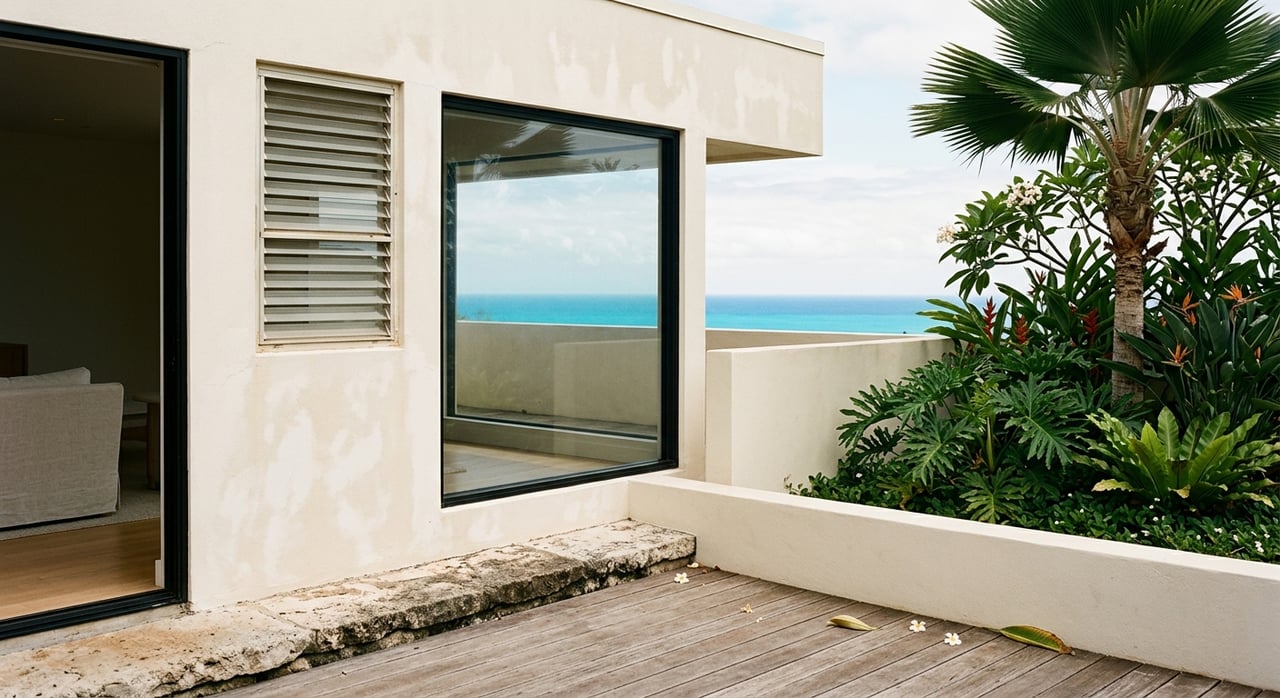
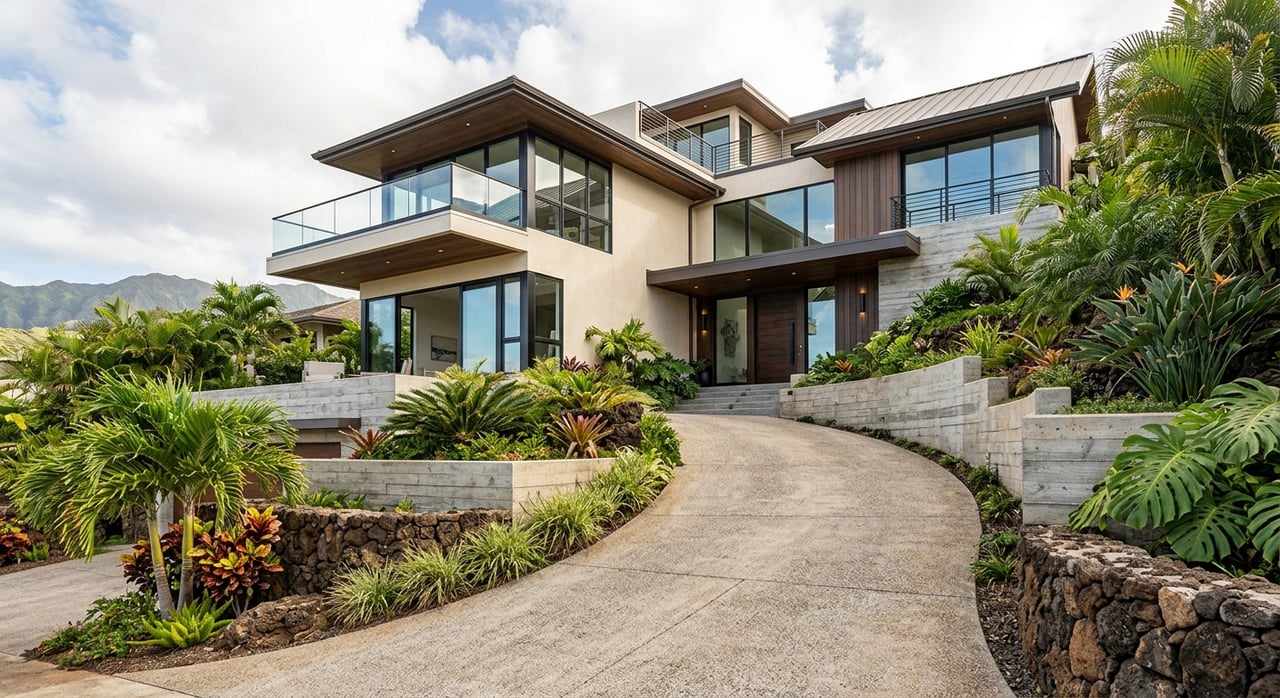
Portlock is a small neighborhood. Home to approximately 130 residences along Portlock Road, the neighborhood is rich in character and history, with an eclectic blend of original 1940s island homes, beautifully renovated residences, and striking custom-built estates, and most properties sit on lots of more than 10,000 square feet. That scale is what makes the summer clock legible. Everyone is working around the same swell, the same tide, the same cul-de-sac, the same launch ramp. The point sets the calendar.
If you are new on Portlock Road this summer, the useful thing to know is not where China Walls is. You can see it from the end of the street. The useful thing is when. Six a.m. is yours. Nine a.m. is a huki. Five p.m. is theirs. Nine p.m. is yours again.
That rhythm is worth learning early. The neighborhood makes more sense once you do.
If you own on the point, or you are considering a home along Portlock Road, Marisa Norfleet works this corner of East Oʻahu closely and is glad to talk through what summer ownership here actually looks like week to week. Let's connect.
Stay up to date on the latest real estate trends.
For personalized assistance with your real estate needs, reach out to Marisa directly. With her deep knowledge of the market and commitment to client satisfaction, she is poised to provide you with the utmost support in navigating your real estate journey.